
HMCS Alberni: Powerful Artifacts Rescued
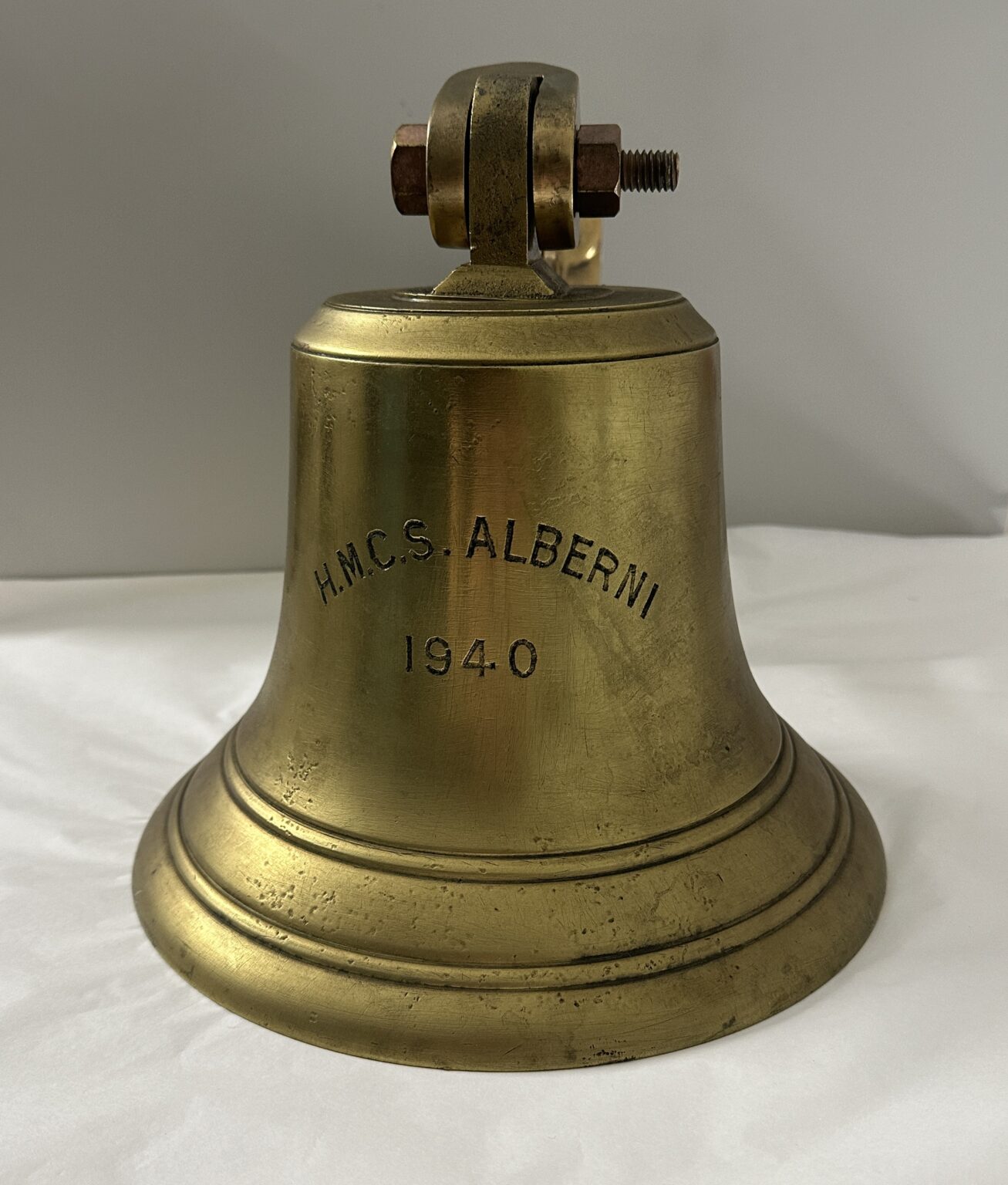
In the summer of 2025, the Juno Beach Centre quietly welcomed two remarkable artifacts into its collection: the bronze bell and builder’s plate from HMCS Alberni.
At first glance, they are simple objects, weathered by time and the sea, marked by history. But together, they tell a powerful story of service, sacrifice, and Canada’s role at sea during the Second World War.
A Ship Built in British Columbia

HMCS Alberni was built in 1940 in Esquimalt, British Columbia, at a time when Canada was rapidly expanding its navy to meet the demands of war.
She was a Flower-class corvette, a small, rugged escort ship designed to protect convoys crossing the Atlantic. These were not glamorous vessels. In fact, they were famously described as uncomfortable and modestly equipped. But they were essential.
Ships like Alberni became the backbone of a navy that would grow into one of the largest in the world.
Service in the Atlantic
Commissioned on February 4, 1941, Alberni was quickly deployed to the Atlantic, where the stakes could not have been higher.
She joined the fight in the Battle of the Atlantic, escorting convoys through dangerous waters patrolled by German U-boats. These missions were long, exhausting, and often perilous.
In 1941, Alberni took part in convoy operations during some of the most intense periods of the battle, helping to protect vital supply lines that sustained the Allied war effort.
Years later, she would also play a role in D-Day operations, supporting the massive effort to liberate Europe.
The Final Mission
On August 21, 1944, while operating in the English Channel during the Battle of Normandy, HMCS Alberni was struck by a torpedo. The attack was sudden. The ship sank quickly. Fifty-nine members of her crew were lost. Their names, their stories, and their sacrifice remain an enduring part of Canada’s wartime history.
Artifacts That Tell a Story

The bell and builder’s plate now held by the Juno Beach Centre are more than historical objects; they are physical connections to the ship and the people who served aboard her.
For years, these items were part of a private collection in the United Kingdom. Today, they have been brought back into a public institution where they can be preserved, studied, and shared.
Their return ensures that HMCS Alberni’s story is no longer distant; it is accessible, visible, and remembered.
Why This Work Matters
Preserving history ensures future generations understand the sacrifices that shaped our world. These artifacts offer insight into Canada’s naval role in the Second World War, the realities of life at sea, and the human stories behind it. This is especially meaningful in British Columbia, where HMCS Alberni was built and where connections to her crew remain.
A Campaign to Preserve and Share
The acquisition of these artifacts was only the first step. The Juno Beach Centre is now working to conserve them and share their stories through new exhibits and digital experiences.
The Alberni Fundraising Campaign aims to raise $25,000 to support artifact conservation, exhibit development, and public display at the Centre.
It is a chance to ensure that the story of HMCS Alberni, and the 59 sailors who lost their lives, is preserved with the dignity it deserves.
How You Can Help
History is only preserved when it is supported.
By contributing to the Alberni Fundraising Campaign, you are helping to ensure that this story continues to be told, not just today, but for generations to come.