
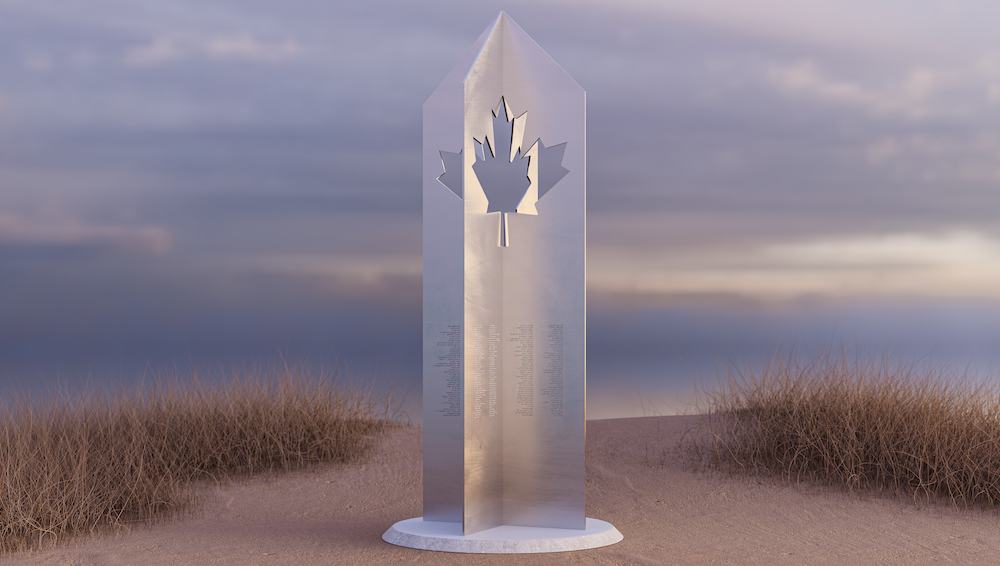
Canada's D-Day Monument
Despite their incredible sacrifice and bravery, there is no single monument on Juno Beach that honours the memory of the 381 Canadians who lost their lives on June 6, 1944. This monument will be a first-of-its-kind Canadian memorial that will stand for generations, honouring their sacrifice.
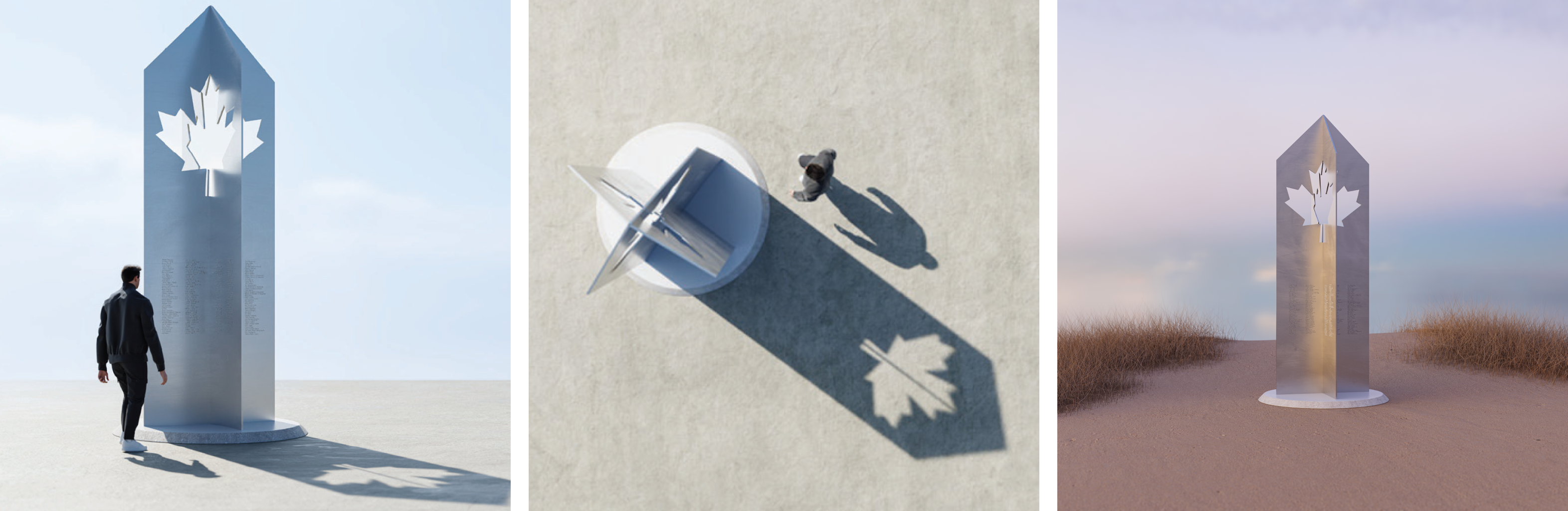
About the Monument
- The shape of the monument will resemble a spearhead, reinforcing the fact that the names on the monument were part of the all-volunteer Canadian effort to pierce German defences and establish a foothold on the Normandy coast.
- Created by the intersection of two panels, the four cardinal points of North, East, South and West symbolize the different places around the world where the Canadian military has fought for peace, while the height of the monument (5 metres) represents a symbolic link between the living on earth and the fallen ‘up above’.
- The maple leaf cut-outs allow the sun to shine through and project maple leaves onto the ground. Symbolically, the maple leaf in the sky represents our fallen heroes, and its projection on Norman soil reminds us how much we owe them for the freedom they secured in Normandy and France.
Remembrance Beyond the Beach
While the Canadian D-Day Monument will stand on Juno Beach as a permanent place of remembrance, its impact will reach far beyond the shoreline.
Alongside the physical monument, the Juno Beach Centre is creating a powerful digital monument experience—one that will bring the stories of the 381 Canadians who fell on D-Day into classrooms, homes, and communities across the country. Through an interactive online platform, visitors will be able to explore a virtual version of the monument, search individual names, and uncover the lives behind each inscription.
This experience will transform remembrance from something we observe into something we feel. Through biographies, photographs, and archival service records, each name becomes a person—a son, a friend, a neighbour—helping Canadians form a personal connection to those who gave their lives on June 6, 1944. It will also provide important historical context, ensuring that future generations understand not only who is commemorated, but why.
For visitors to the Juno Beach Centre, the digital monument will deepen their experience of the site. For those who may never travel to Normandy, it will ensure that Juno Beach remains accessible—alive with memory, meaning, and connection—no matter where they are.
By supporting this project, you are helping to build more than a monument in stone. You are helping to create a living, accessible legacy of remembrance—one that will endure, educate, and inspire Canadians for generations to come.
Donate Today!
The D-Day Monument will be the first of its kind to name all 381 Canadians who died on June 6, 1944, right on the very beaches where many of them fell. Supporting this monument is a powerful way to honour the foundational sacrifices that shaped Canada’s place in a global order at a time when that order is changing again.
And thanks to the generous support of Lysander Funds & Canso Investment Council, the next $1 million we raise will be matched dollar for dollar. Donate today to double the impact of your gift!